

All levels · 4 min read
Use & care of Felt Alive needles
Six tips to avoid breaking needles and poking yourself — from my studio.
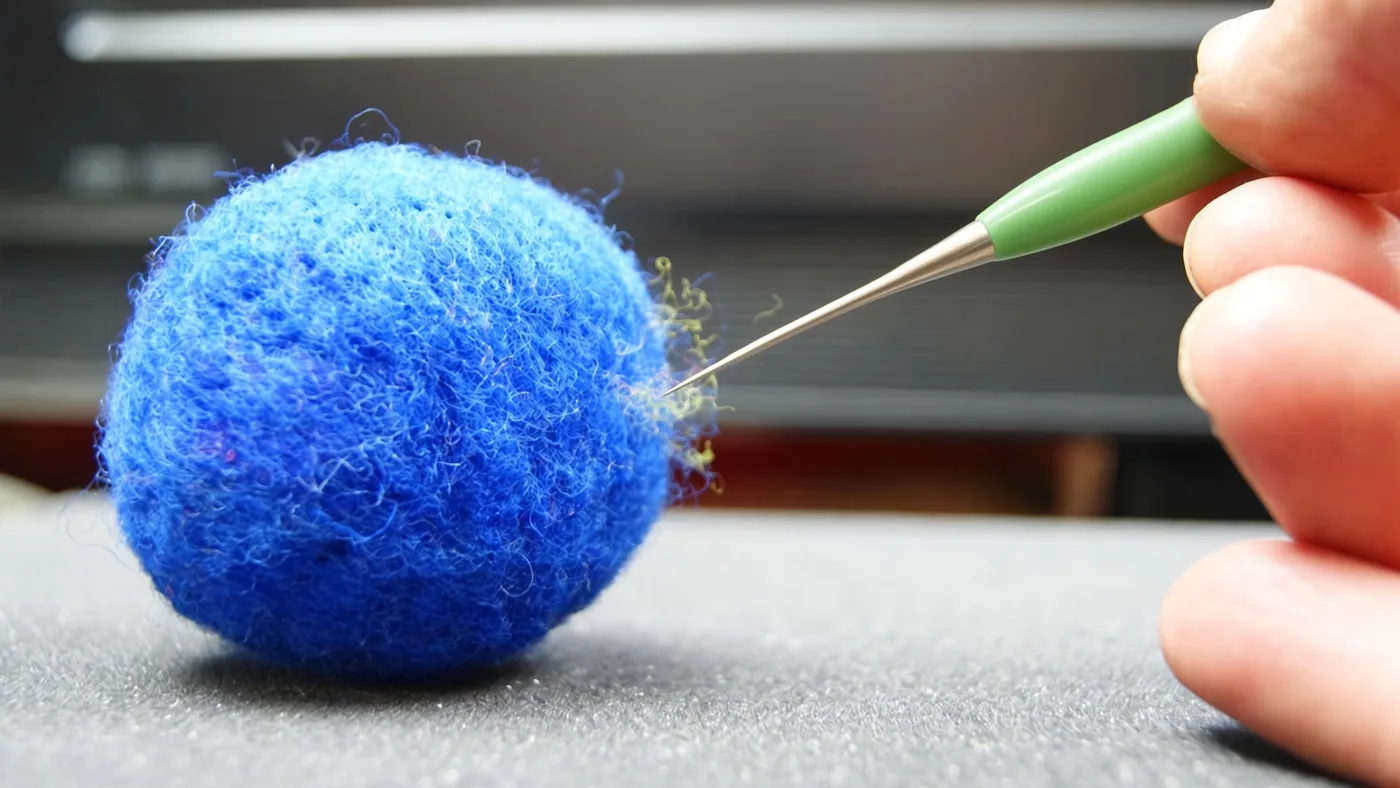
Felting needles are hardened, thin, and honest. These six habits save blades — and fingertips.
1. Work area
Set up your work area on a sturdy table with good lighting. Curling up on the couch with a bunch of wool and sharp felting needles is fraught with danger. Use a resilient surface (foam pad) to absorb the shock of the needles.
2. Grip
The tighter you grip your needle, the worse it will be if you miss your mark. Grip your needle just as lightly as you can. As the wool begins to felt and gets dense, switch to a finer gauge needle that glides in with little resistance.
3. Speed
With so many needle pokes to turn wool into felt it is natural to think faster is better. It’s not. Slow, shallow jabs are more effective than fast, deep jabs. The faster you go, the more needles you break and the more it hurts when you miss your mark.
4. Angle and depth
Along with speed, the depth and angle of your needle jabs is important to pay attention to. The blade of your needle can break easily by piercing too deep. Holding your needle at different angles while you work is important, but remember to pull out at the same angle you pierced in.
5. Control
The fragile blade end of the needle is the working part. If you see it bending and flexing as you work, adjust your methods so the needle glides in and out of your project with as little strain as possible, or switch to a finer gauge needle.
6. Density
There are no rules about how tight or densely felted you should make your projects, but the firmer you make your needle felted projects, the likelier it is that you will break more needles.
Poke in, pull out
The usual crime is levering: you push in, then tilt to drag wool sideways. The barb is designed to travel in a straight line. Side load snaps the shaft — often at the first barb. Turn the wool, not the needle. Felt Alive needles are permanently set. Keep a spare yellow. Working felters already do.
Clean the pad
A rubber lint brush — the dollar-store kind for dog hair — in short, easy circles. A little pressure, not a scrub. It lifts the fibers the needle drove in so the next poke hits wool, not a felted crust. Don’t mine the foam: if chunks come up into the work, you went too deep.